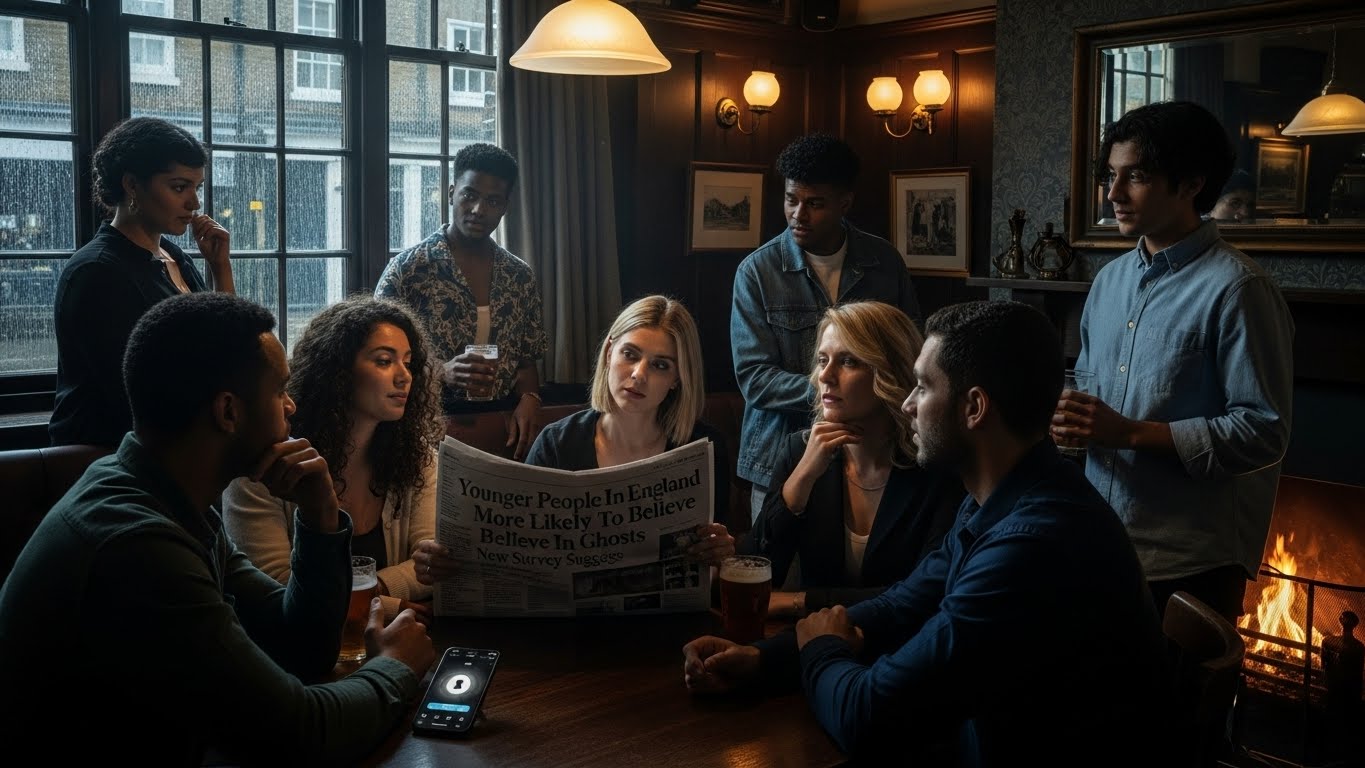
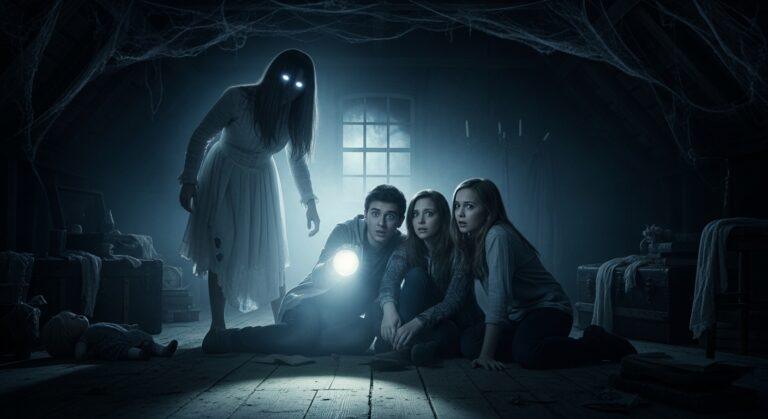
Younger People In England More Likely To Believe In Ghosts New Survey Suggests
A new study into English folklore has revealed that belief in ghosts and the supernatural is alive and well - particularly among younger adults. Researchers from Sheffield Hallam University.
Younger People In England More Likely To Believe In Ghosts New Survey Suggests
Updated: April 8, 2026
A new study into English folklore has revealed that belief in ghosts and the supernatural is alive and well – particularly among younger adults.
Researchers from Sheffield Hallam University, the University of Hertfordshire and Chapman University in the United States carried out what they describe as the first major folklore survey in more than sixty years. The results show that just over a third of people in England believe in ghosts or spirits, with those aged between 25 and 34 the most likely to say they believe in the paranormal.
The National Folklore Survey asked 1,730 people aged over sixteen about their views on everything from hauntings to life after death. The survey, carried out by Ipsos UK, was designed to be representative of England’s population by age, gender, religion, education and region.
The findings suggest that belief in the paranormal remains a significant part of modern culture. Around 39% said they believe there is life after death, while 36% said they think ghosts or spirits of the deceased exist. Just over a quarter said they believe it is possible to communicate with the dead.
One in six respondents said they had personally experienced something they would describe as supernatural. However, many said they had never spoken about it – almost one in five admitted keeping the experience entirely to themselves.
The survey also touched on related experiences. Nearly half of respondents said they had experienced déjà vu – the strange sensation that a current moment has happened before – and more than a fifth claimed to have had a premonition or vision of a future event.
There were strong regional differences. People living in London were more open to practices such as using Ouija boards – flat boards marked with letters, numbers and words used to attempt communication with spirits – or attending séances. Meanwhile, those living in the East Midlands were among the least likely to report a belief in ghosts or to take part in Halloween traditions.
While the study was published in the run-up to Halloween, it also revealed that Bonfire Night still slightly edges out Halloween in popularity. Just over half of those questioned said they celebrate Bonfire Night, compared with 46% who mark Halloween in some way.
Halloween remains more popular with younger people. Around a third of participants said they give out sweets, and nearly the same number planned to watch horror films or carve pumpkins, though these activities drop sharply after the age of 45.
The researchers say that traditions such as Halloween and Bonfire Night endure partly because they foster a sense of shared community. Whether people are lighting bonfires, carving pumpkins or swapping ghost stories, these customs – old or new – show how folklore continues to shape the way we express fear, curiosity and belief.