Sun news update: Sun-stuff blast brings severe storms
Updated: April 8, 2026
Sun news January 20: Sun-stuff blast brings severe storms
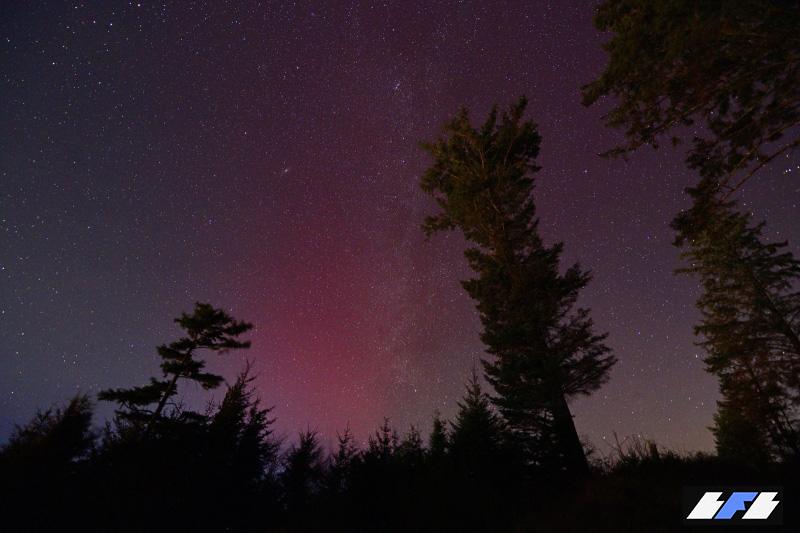
Today’s top story: A blast of sun-stuff fired out by Sunday’s X1.9 (strong) flare impacted Earth last night. It reached our magnetic field at approximately 18:38 UTC, and it didn’t arrive quietly; we observed G4 (severe) geomagnetic storm levels overnight and into this morning. Many at northern latitudes saw the resulting auroras. But this light display was less widespread than you’d expect for such a strong storm. Why? Discover the intriguing science here.

Past 24 hours on the sun
(11 UTC January 19 – 11 UTC January 20)
- Flare activity: Solar activity reached moderate levels, with 14 flares observed over the past day. The total included 1 M-class (moderate) flare and 13 C-class (common) flares.
- Strongest flare: M1.2 from AR4345 at 11:19 UTC on January 19.
- Sunspot regions: The Earth-facing solar disk currently holds 10 numbered active regions.
- Past day’s most active region: AR4345 was the key driver of impacts, producing the M1.2 event and additional 8 C-class flares.
- Regions to watch:
- AR4341 (beta) lost some magnetic complexity, but remains under a close eye after firing the recent X flare.
- AR4345 – today’s lead flare producer – and AR4342 both have moderately high-potential beta-gamma complexities.
- Sun-stuff blasts? Other than the coronal mass ejection (CME) that triggered severe geomagnetic storming last night, no new Earth-bound CMEs have been observed.
Past 24 hours in space weather
- Solar wind: Solar wind speeds dramatically increased to very high levels following the arrival of the CME last night, along with continuing coronal hole influence. The interplanetary magnetic field (IMF) was high. The Bz component was mainly oriented northward overnight, limiting aurora potential, although there was a brief southward period from 5-10 UTC today.
- Earth’s magnetic field: Earth’s magnetic field ranged up to extreme geomagnetic storms, reaching Kp = 9. The Kp index is at 8 at the time of this writing.
Sun activity and space weather forecast
- Flare activity forecast: Moderate levels of flaring are expected, with continued chances for M-class flares mainly from AR4341. A slight chance for another X-class flare remains through January 21, again primarily tied to AR4341.
- Geomagnetic activity forecast:
- January 20: The major CME has arrived, bringing a continued chance for G3 (strong) to G4 (severe) geomagnetic storming.
- January 21: Activity should gradually ease toward unsettled levels as coronal hole influence continues and any remnants of the CME effects wane. Lingering storm intervals remain possible depending on how long the CME’s magnetic field stays favorably southward.

Sun news January 19: X flare and CME fired our way!
BAM! The sun exploded with a powerful X1.9 flare from sunspot region AR4341 yesterday. The blast triggered an R3 (strong) radio blackout across Earth’s sunlit hemisphere. And it also launched a huge blob of solar material – a coronal mass ejection, or CME – toward our planet. It’s the classic setup for geomagnetic storms and auroras once the plasma cloud reaches Earth.
Meanwhile, energetic protons from the sun are raining down on Earth in the wake of the X flare, causing an ongoing solar radiation storm at S3 (strong) levels. This has triggered what’s called a polar cap absorption event, degrading or completely disrupting high-frequency radio communications inside the Arctic Circle.

Past 24 hours on the sun
(11 UTC January 18 – 11 UTC January 19)
- Flare activity: Solar activity reached high levels, with 9 flares observed (1 X-class [strong], 0 M-class [moderate], 8 C-class [common]).
- Strongest flare: X1.9 from AR4341 at 17:27 UTC on January 18.
- Sunspot regions: The Earth-facing solar disk currently holds 9 numbered active regions.
- Past day’s most active region: AR4341 was the key driver of impacts, producing the X1.9 event and additional C-class activity.
- Region to watch:
- AR4341 (beta-gamma) maintained a magnetically complex structure with a weak delta region, and produced the X flare.
- Sun-stuff blasts? An Earth-directed, full-halo coronal mass ejection erupted at 18:09 UTC with the X1.9 flare. Analysts estimate Earth arrival around 1-3 UTC on 20 Jan. It’s expected to trigger a Kp of 7–9, which could mean G3-G5 (strong to extreme) geomagnetic storms.
Past 24 hours in space weather
- Solar wind: Solar wind speeds decreased under continuing coronal hole influence. The interplanetary magnetic field (IMF) was moderate. The Bz component trended southward at times, briefly opening the door for enhanced aurora potential.
- Earth’s magnetic field: Earth’s magnetic field ranged from quiet to active levels, reaching Kp = 4.
The sun in recent days


Sun images from our community


We sometimes feature sun images obtained using hydrogen-alpha filters. Read why.
Bottom line: Earth’s geomagnetic field was disturbed to G4 (severe) storm levels overnight following the arrival of the coronal mass ejection from Sunday’s X flare. Did you catch any auroras?